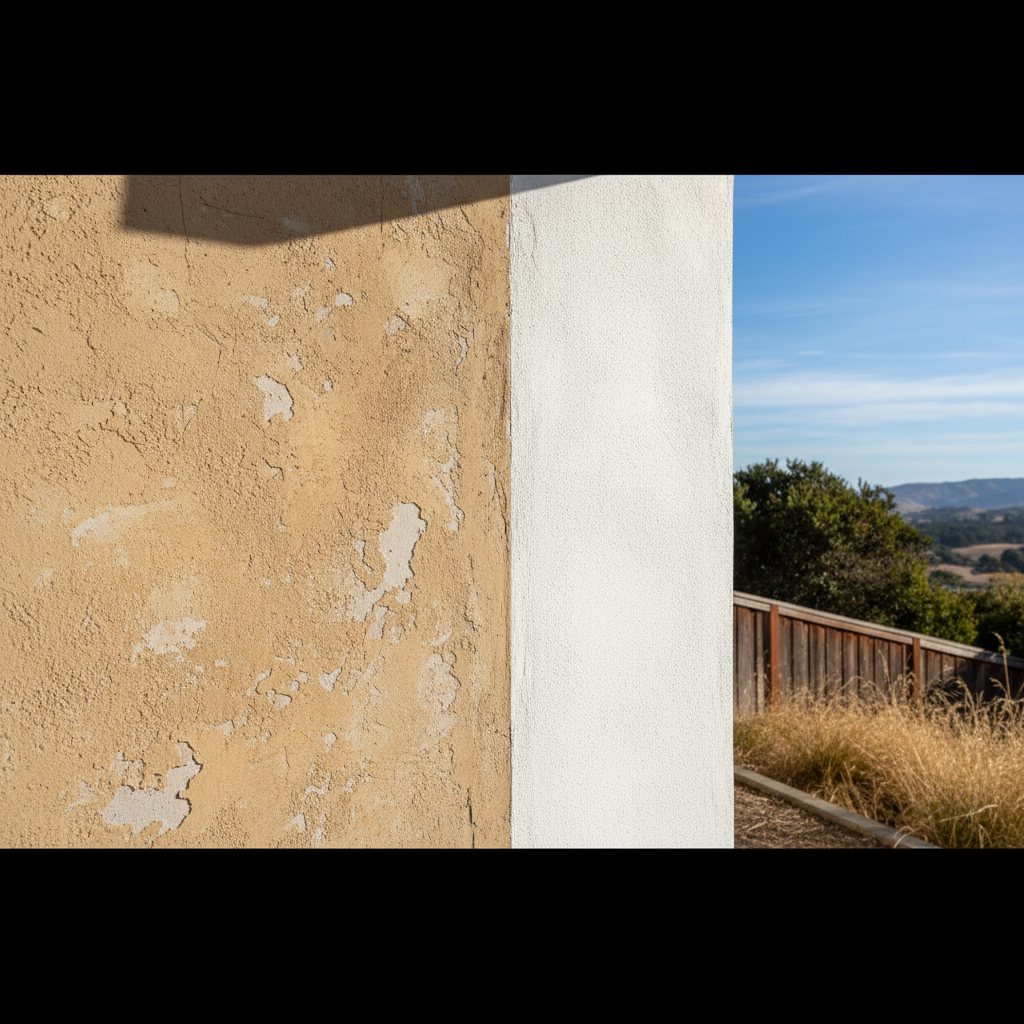
Your stucco's looking a little rough, huh? Maybe some cracks, water stains, or it's just plain old and tired. You're probably wondering if you can just patch it up or if you need to bite the bullet and replace the whole thing. It's a common question I get from folks all over Richmond, from the older homes in the Richmond Annex to the newer builds up in the hills.
There are two main ways to deal with failing stucco: a full tear-off and re-stucco, or what I call a 'stucco over' job, which is essentially putting new stucco right on top of the old, often after some repairs. Let's talk about the pros and cons of each, because what looks cheaper upfront isn't always the best deal in the long run.
Full Stucco Tear-Off and Re-Installation
This is the gold standard, the Cadillac of stucco replacement. It means we strip everything off your house down to the sheathing. Every bit of old stucco, lath, and even the paper is removed. Then, we start fresh with new building paper, new metal lath, scratch coat, brown coat, and finally, the finish coat. It's a complete do-over.
- Cost: This is definitely the more expensive option upfront. You're paying for demolition, disposal, and all new materials and labor from the ground up. There's no way around it, it's a significant investment.
- Durability: Unbeatable. When you start fresh, you can address any underlying issues like dry rot, framing problems, or water intrusion that might be hiding behind the old stucco. You get a brand new, properly installed system that's built to last for decades. We're talking 50+ years if done right. Plus, with modern materials and techniques, you get better water resistance and energy efficiency.
- Maintenance: Very low. Once it's done, you're good for a long, long time. Just keep an eye on your gutters and drainage, like you should with any exterior.
- Appearance: Flawless. You get a perfectly smooth and consistent finish. No bumps, no old crack lines showing through. You can pick any color or texture you want, and it'll look brand new.
- When I Recommend It: If your stucco has widespread cracking, bulging, efflorescence (those white salt deposits), or if you suspect significant water damage or dry rot underneath, a full tear-off is the only responsible choice. Also, if your home is older and has the original one-coat or two-coat system, or if it's just reached the end of its life, this is the way to go. It's also a great option if you're planning on living in your home for a long time and want peace of mind.
Stucco Over Existing Stucco (Resurfacing/Re-stuccoing)
This approach involves repairing any major cracks or loose areas on your existing stucco, then applying a new layer (or layers) of stucco directly over the old. Sometimes we'll add a new layer of lath over the old stucco first, especially if the existing surface isn't perfectly sound, but often it's just a direct application.
- Cost: Generally less expensive than a full tear-off. You save on demolition and disposal costs, and often on some material and labor too, since you're not starting from scratch.
- Durability: This is where it gets tricky. If the existing stucco is in really good shape – meaning it's sound, firmly attached, and has only minor, superficial cracking – then a stucco-over job can last a good 15-25 years. But if the underlying stucco is already failing, this method is just putting a band-aid on a bigger problem. The new layer is only as good as what it's attached to.
- Maintenance: Can be higher. If the underlying issues weren't fully addressed, you might see cracks reappear sooner. You'll need to be more vigilant.
- Appearance: Can look good, but sometimes the texture of the old stucco might telegraph through, or old crack patterns can eventually reappear. It's harder to get a truly perfect, uniform finish compared to starting fresh. Also, adding another layer of stucco can sometimes change the depth of window and door frames, which might look a little off.
- When I Recommend It: Only when the existing stucco is fundamentally sound. I'm talking about minor cosmetic issues, perhaps some fading, or small, non-structural cracks. It's a good option for homeowners on a tighter budget who need a refresh, and where a thorough inspection confirms the existing substrate is solid. If you're planning to sell in a few years and just need to boost curb appeal, this can work.
My Recommendation for Richmond Homeowners
Look, I've seen a lot of stucco in this town over the years. Given our climate – the marine layer, the occasional heavy rains, and the general age of many homes around here – I almost always lean towards a full stucco tear-off and re-installation when a home needs significant stucco work. It's the only way to truly ensure you're getting a durable, long-lasting solution that protects your home properly.
A full tear-off lets us inspect the sheathing, fix any hidden water damage or rot, and install a modern, robust stucco system that meets today's building codes. You get a fresh start, and you won't have to worry about it for decades. While the initial cost is higher, the peace of mind and the longevity of the repair make it a far better value in the long run. You're not just covering up problems; you're solving them.
If you're unsure which route is best for your Richmond home, give us a call at Richmond Stucco & Plastering. We'll come out, take a look, and give you an honest assessment of what your home really needs.