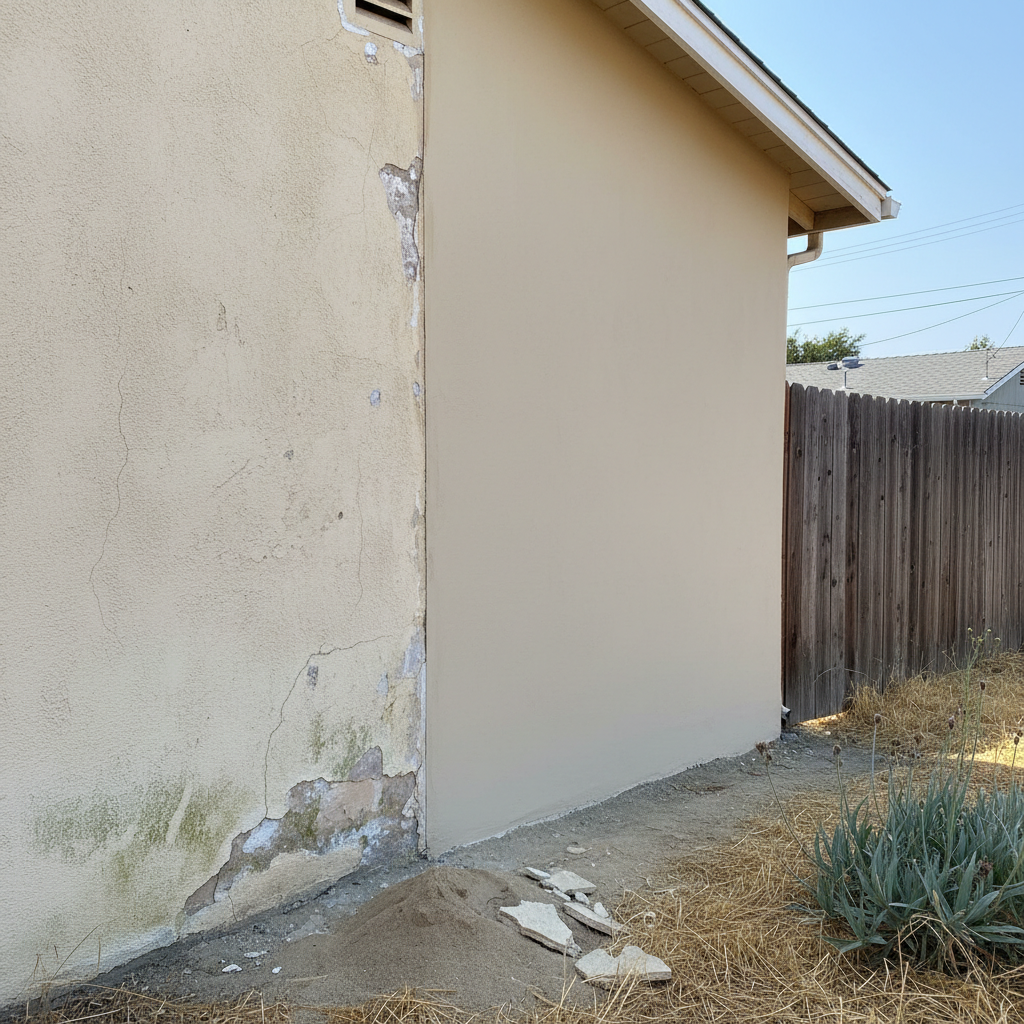
Old Stucco Out: Sandblasting vs. Chipping It Off
So, you're thinking about ditching that old stucco on your Richmond place. Maybe it's seen better days, maybe you're after a fresh look, or perhaps it's just time for a change. Whatever the reason, you've really got two main ways to get it off: sandblasting (or media blasting) and good old chipping or grinding. I've done both plenty of times around here, from the classic Victorians in Point Richmond to the ranch-style homes over in the Richmond Annex, and each method has its place. Let's dig into what you should know.
Sandblasting: Fast, But Messy
Sandblasting, or more accurately, media blasting – we often use stuff like crushed glass or walnut shells, not just sand – is pretty much what it sounds like. We're blasting the stucco off with a high-pressure stream of abrasive material. It's quick, really quick. If you've got a big surface area and the stucco isn't super thick or bonded like concrete, this can be the fastest way to strip it right down to the sheathing or whatever siding was originally there.
Here's the kicker with blasting, though: it's incredibly messy. I'm talking dust everywhere. Even with containment, you're going to end up with a fine layer of whatever media we're using, plus stucco dust, all over your property and probably your neighbor's too. We're talking about covering absolutely everything: windows, landscaping, cars, you name it. It also creates a ton of waste material that needs careful cleanup and proper disposal. And if your stucco happens to have lead paint or asbestos (which is pretty common in older Richmond homes), blasting it can kick up hazardous airborne particles. That makes containment and disposal a much bigger, more expensive headache. You'll need special permits and safety protocols for that, no question.
Another thing to think about is what it does to the surface underneath. A powerful blast can sometimes etch or even damage the material below, whether it's wood sheathing or brick. You really need someone experienced holding that nozzle, otherwise, you might just create more repair work than you started with.
Chipping/Grinding: Slower, but Way More Controlled
The other option is to chip or grind the stucco off. This means using power tools like grinders with diamond blades, chipping hammers, or sometimes just good old pry bars and chisels. It's definitely more labor-intensive, no doubt about it. It takes longer, especially on a bigger house.
However, the control you get with this method is a huge plus. You can be much more precise, which means less chance of damaging the structure underneath. If you're planning to re-stucco, this precision really helps keep the wall's integrity for the new application. There's still dust, of course, but it's generally heavier and falls closer to where we're working. That makes containment and cleanup a bit easier than with blasting. It's not a dust-free job by any stretch, but it's a different animal.
For homes that might have hazardous materials like lead or asbestos, chipping is often the better way to go because it keeps airborne particles to a minimum. We can use HEPA vacuums and other tricks to control dust right at the source, making it safer for everyone involved and easier to follow environmental rules. This is super important for many of Richmond's older homes, where you just never know what's hiding under that top layer of stucco until you start peeling it back.
Cost, Durability, Maintenance, and Appearance
- Cost: Blasting can sometimes be cheaper upfront for big, straightforward jobs because it's so fast. But if you factor in extensive containment, hazardous material removal, and potential repairs to the surface below, chipping can often end up being more cost-effective in the long run. Labor costs are higher for chipping, sure, but the material and disposal costs for blasting can really pile up.
- Durability: This isn't really about the removal method itself, but what happens next. A good removal, no matter how it's done, sets the stage for a durable new finish. Chipping often leaves a better, more intact surface for new stucco to stick to, which helps with overall durability.
- Maintenance: Again, not directly tied to removal. But if blasting damages the underlying surface, that could lead to future problems that need more maintenance. Chipping, being gentler, cuts down on that risk.
- Appearance: The removal method doesn't directly change how the final product looks; that's all about the new finish. But if the surface underneath gets damaged during removal, it could mess with how smooth or sound the new application turns out.
My Recommendation for Richmond Homeowners
Look, if you've got a small section of stucco that needs to go, or you're absolutely positive there are no hazardous materials and the stucco isn't super well-bonded, blasting might be an option. But honestly, for most homeowners in Richmond, especially with older homes, I lean towards chipping and grinding.
Why? Because it's safer, more controlled, and generally leads to a better outcome for the structure underneath. You've got less risk of damaging the sheathing, and if we find lead paint or asbestos (which, let's be real, happens more often than not around here), we can deal with it much more safely and efficiently. The extra time and labor for chipping are usually worth it for your peace of mind and the quality of the surface we're left with for your next project.
At Richmond Stucco & Plastering, we always do a thorough check before suggesting a removal method. We'll look for hazardous materials, see how well the stucco is bonded, and examine the structure underneath. We just want to make sure we're doing the job right, the first time, and safely for everyone involved.